Zinc
A trace element needed by more than 300 enzymes, for immunity and brain function. It is the natural counterweight to copper. Zinc appears in all four biotypes of Walsh’s table — which is why we consider it the most important nutrient to measure.
Amount per daily dose of the supplements in the PsyLab catalogue — indicative, not a recommendation. Dosing is decided by a doctor.
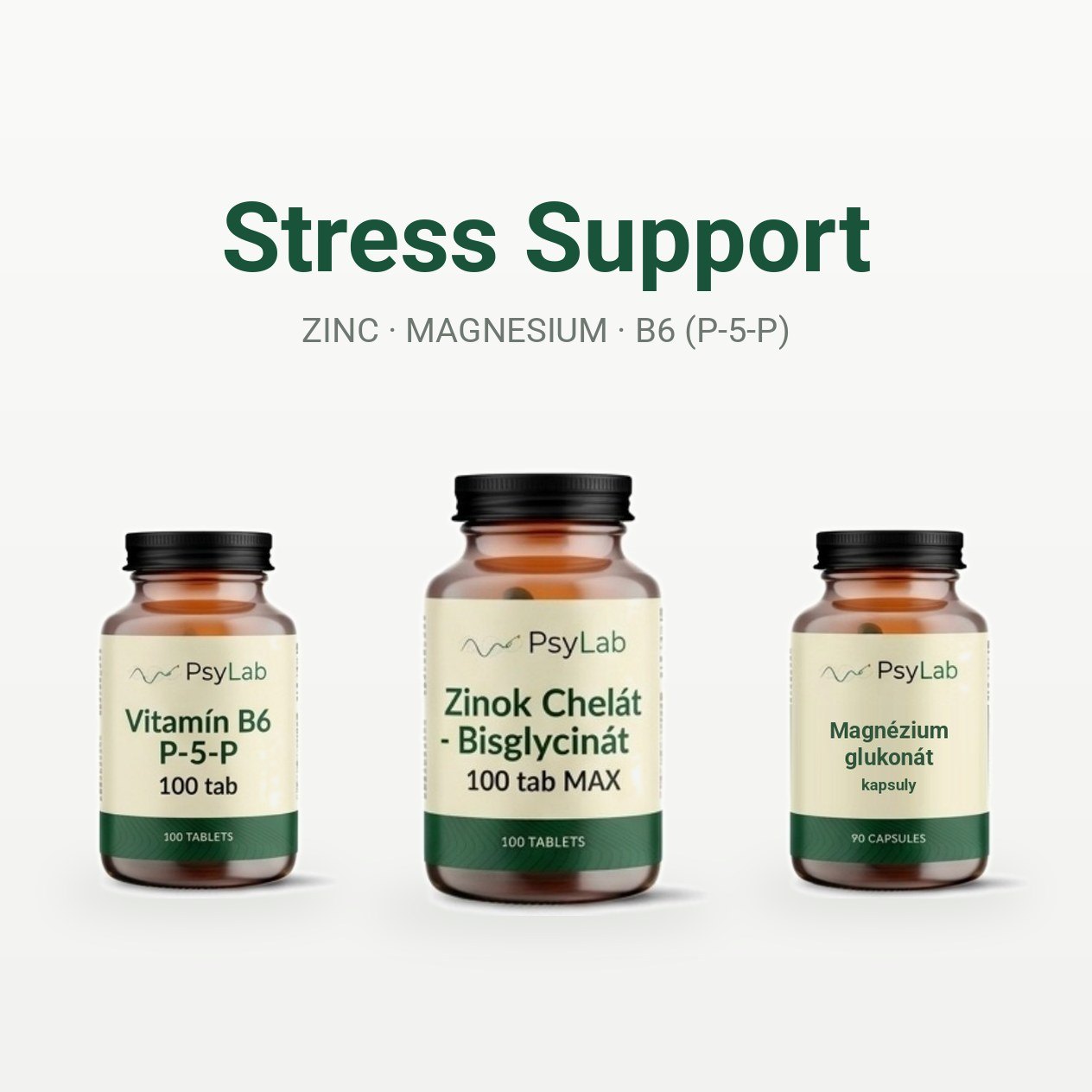
Zinc is part of the Stress Support set — three universal nutrients: vitamin B6 (P-5-P), zinc bisglycinate and magnesium gluconate — 3 packs for €29.
EU-authorised health claims
Zinc:
- contributes to normal cognitive function
- contributes to normal macronutrient metabolism
- contributes to normal protein synthesis
- contributes to the maintenance of normal hair, nails and skin
- contributes to the maintenance of normal vision
- contributes to the normal function of the immune system
- contributes to the protection of cells from oxidative stress
- has a role in the process of cell division
Source: EU register of health claims (Commission Regulation (EU) No 432/2012).
Link to biotypes
Beneficial in: histadelia, histapenia, pyroluria, copper overload
Potentially unsuitable in: —
Signalling substances: supports GABA; dampens noradrenaline
Based on W. J. Walsh’s imbalance table (Nutrient Power).
Possible signs of a low level
- more frequent infections
- slower healing
- reduced taste and smell
- hair loss
- sensitivity to stress
These signs can have many other causes — so it is better to measure the level than to guess.
Food sources
Measured in the Vitamin & Mineral Test
We measure the level in blood together with other parameters. We explain your result in a consultation.
The information on this page is educational and does not replace a doctor’s advice. Decisions about food supplements and dosing belong with a doctor.